
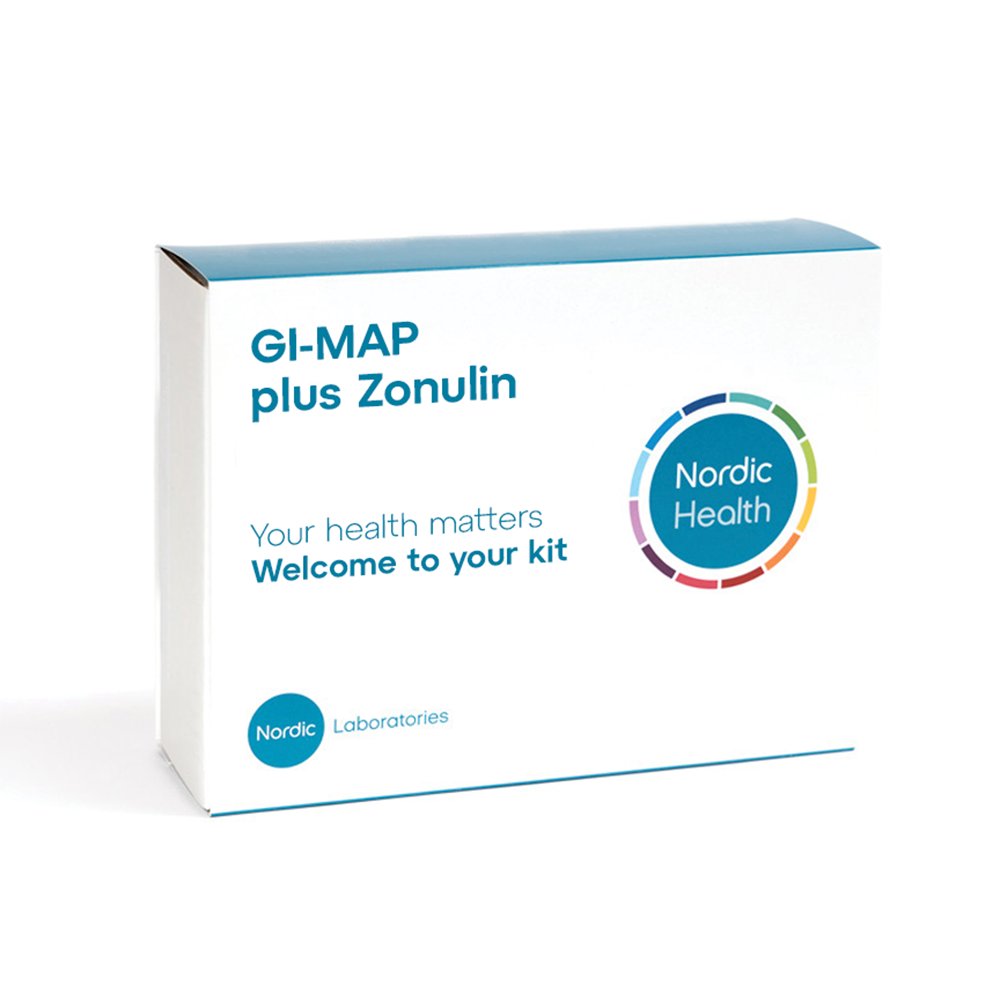
GI MAP plus Zonulin
 Stool
Stool
 21 days +/- 4 Days
Indications
- Digestive symptoms: Chronic diarrhoea, constipation, bloating, gas or abdominal pain.
- Altered bowel habits: Ongoing changes in stool frequency, urgency or consistency.
- Suspected gastrointestinal disorders: Evaluation in contexts such as irritable bowel syndrome, inflammatory bowel disease or coeliac disease.
- Recurrent gastrointestinal symptoms: Exploration of potential bacterial contributors including Escherichia coli or Helicobacter pylori.
- Malabsorption concerns: Unexplained weight loss, anaemia or signs of nutrient insufficiency.
- Immune-related conditions: Investigation of gastrointestinal factors in autoimmune or inflammatory presentations.
- Skin conditions: Eczema, acne or psoriasis where gut involvement is considered.
- Fatigue or neurological symptoms: Brain fog, low energy or mood changes in complex clinical presentations.
- Altered gut barrier function: Assessment of intestinal permeability where disruption of gut lining integrity is suspected.
Overview
The Gastrointestinal Microbial Assay Plus (GI-MAP) with zonulin analyses the composition of microbial DNA from a stool sample using advanced quantitative polymerase chain reaction (qPCR) technology. This test provides information about a broad spectrum of microorganisms, including various bacteria, fungi, viruses, and parasites that may be present in the gastrointestinal tract. It also measures important functional markers relevant to digestive and immune processes, such as calprotectin, secretory IgA, pancreatic elastase, and zonulin, which is linked to intestinal barrier integrity. Together, these factors offer valuable insights into the microbial ecosystem and its potential interactions with gut function and overall wellbeing.
The panel includes a range of microbial targets, covering pathogenic, commensal and opportunistic organisms, helping to characterise the microbial balance in the digestive system. Results are reported quantitatively, allowing comparison over time to observe shifts in microbial patterns that might be associated with dietary, lifestyle or other interventions. The test can support explorations into how changes in gut microbiota and barrier-related markers correspond with digestive comfort or general health interests, complementing information gathered from clinical history and lifestyle factors. Optional add-ons such as StoolOMX (measuring bile acids and short-chain fatty acids) and gluten peptide analysis extend the scope of the assessment.
By combining microbial data with immune and digestive markers including zonulin, the Gastrointestinal Microbial Assay Plus (GI-MAP) helps users better understand their gut environment from a wellness and nutritional perspective. The detailed quantitative output is designed to enable ongoing monitoring of microbial profiles and gut function markers as part of broader lifestyle or health optimisation efforts. This test is suitable for individuals interested in gaining a deeper view of their digestive system and microbial interactions without focusing on clinical diagnoses or disease detection.
Gastrointestinal Microbial Assay Plus (GI-MAP) is intended for informational, educational, wellness and/or research purposes only. It is not intended for use in medical diagnosis, disease screening or clinical decision-making. Gastrointestinal Microbial Assay Plus (GI-MAP) is not a replacement for clinical laboratory testing and does not provide medical diagnoses. This content is intended for general information within the EU market and should not be interpreted as a regulated in-vitro diagnostic claim.
Research
- Abubakar I, Irvine L, Aldus CF, et al. A systematic review of the clinical, public health and costeffectiveness of rapid diagnostic tests for the detection and identification of bacterial intestinal pathogens in faeces and food. Health Technol Assess. 2007;11(36):1-216.
- Amar CF, East CL, Gray J, Iturriza-Gomara M, Maclure EA, McLauchlin J. Detection by PCR of Eight groups of enteric pathogens in 4,627 faecal samples: re-examination of the English casecontrol Infectious Intestinal Disease Study (1993-1996). Eur J Clin Microbiol Infect Dis. 2007;26(5):311-323.
- Bischoff SC, Barbara G, Buurman W, et al. Intestinal permeability — a new target for disease prevention and therapy. BMC gastroenterology. 2014;14:189.
- Canny GO, McCormick BA. Bacteria in the intestine, helpful residents or enemies from within? Infection and immunity. 2008;76(8):3360-3373.
- Fasano A, Shea-Donohue T. Mechanisms of disease: the role of intestinal barrier function in the pathogenesis of gastrointestinal autoimmune diseases. Nature clinical practice. 2005;2(9):416-422.
- Iijima Y, Asako NT, Aihara M, Hayashi K. Improvement in the detection rate of diarrhoeagenic Bacteria in human stool specimens by a rapid real-time PCR assay. Journal of medical microbiology. 2004;53(Pt 7):617-622.
- Kahlau P, Malecki M, Schildgen V, et al. Utility of two novel multiplexing assays for the detection of gastrointestinal pathogens - a first experience. SpringerPlus. 2013;2(1):106.
- Kamada N, Seo SU, Chen GY, Nunez G. Role of the gut microbiota in immunity and inflammatory disease. Nature reviews. Immunology. 2013;13(5):321-335.
- Khanna S, Tosh PK. A clinician's primer on the role of the microbiome in human health and disease. Mayo Clinic proceedings. 2014;89(1):107-114.
- Othman M, Aguero R, Lin HC. Alterations in intestinal microbial flora and human disease. Current opinion in gastroenterology. 2008;24(1):11-16.
- Rashid T, Ebringer A. Autoimmunity in Rheumatic Diseases Is Induced by Microbial Infections via Crossreactivity or Molecular Mimicry. Autoimmune diseases. 2012;2012:539282.
- Schabereiter-Gurtner C, Hirschl AM, Dragosics B, et al. Novel real-time PCR assay for detection of Helicobacter pylori infection and simultaneous clarithromycin susceptibility testing of stool and biopsy specimens. Journal of clinical microbiology. 2004;42(10):4512-4518.
- Stecher B, Hardt WD. The role of microbiota in infectious disease.Trends in microbiology. 2008;16(3):107-114.
- Tiwana H, Wilson C, Walmsley RS, et al. Antibody responses to gut bacteria in ankylosing spondylitis, rheumatoid arthritis, Crohn's disease and ulcerative colitis. Rheumatology international. 1997;17(1):11-16.
See also Brochure under ‘Downloadable files’ for even more research.

All‑in‑one functional medicine platform for education, testing, and patient care.
Nordic Laboratories ApS
Simply Nature Ltd
Stonegate East Sussex TN5 7DU,
United Kingdom